Home Septic Guide First-time septic owner
New owner guide
New to septic? A first-time owner’s guide
Moving out of town onto a septic system is simpler than it sounds. Your wastewater stays on your property instead of going to a sewer plant, so a few habits keep it working for decades. Here’s what to do in your first month and your first year.
First-month checklist
What not to flush
When to pump
Quick answer
What should a new septic owner do first?
Find the tank and mark it, find out when it was last pumped, and book a pump-out if nobody knows. Then learn the short list of things that shouldn’t go down the drain, point gutters away from the drain field and keep vehicles off it. A pump-out every 3 to 5 years covers most homes.
Find it
Locate and mark the tank
3–5 yrs
Typical pump-out interval
Paper only
The only thing to flush besides waste
How it works
How does a septic system work?
Everything that goes down a drain flows to the tank. Solids sink to form sludge, grease and light material float as scum, and the clearer water in the middle flows out to the drain field. There, the soil filters and treats it. Pumping removes the sludge and scum before they build up enough to reach the field.
More detail: septic tank baffles explained.
First month
What should you do in your first month on septic?
- Find and mark the tank. Ask the seller, check records or call us to locate it.
- Get the pumping history. No record? Book a pump-out and start one.
- Find the drain field. Keep cars, sheds and pools off it.
- Check for a pump and alarm. Know where the alarm box is and what it means.
- Redirect gutters. Keep roof water away from the tank and field.
- Put a reminder in your calendar for the next pump-out.
Do and don’t
What can and can’t go down the drain on septic?
| Fine | Keep out |
|---|---|
| Toilet paper | Wipes, even “flushable” |
| Normal soap and detergent | Grease and cooking oil |
| Small amounts of household cleaner | Paint, solvents, pesticides |
| Kitchen scraps in small amounts | Coffee grounds and lots of food (with a disposal) |
| Water, spread through the week | Feminine products, cat litter, paper towels |
Habits
Which everyday habits protect your septic system?
- Spread laundry over the week instead of one big wash day
- Fix running toilets and dripping faucets
- Use a trash can in every bathroom
- Scrape plates into the trash before washing
- Skip septic additives; pumping is what works
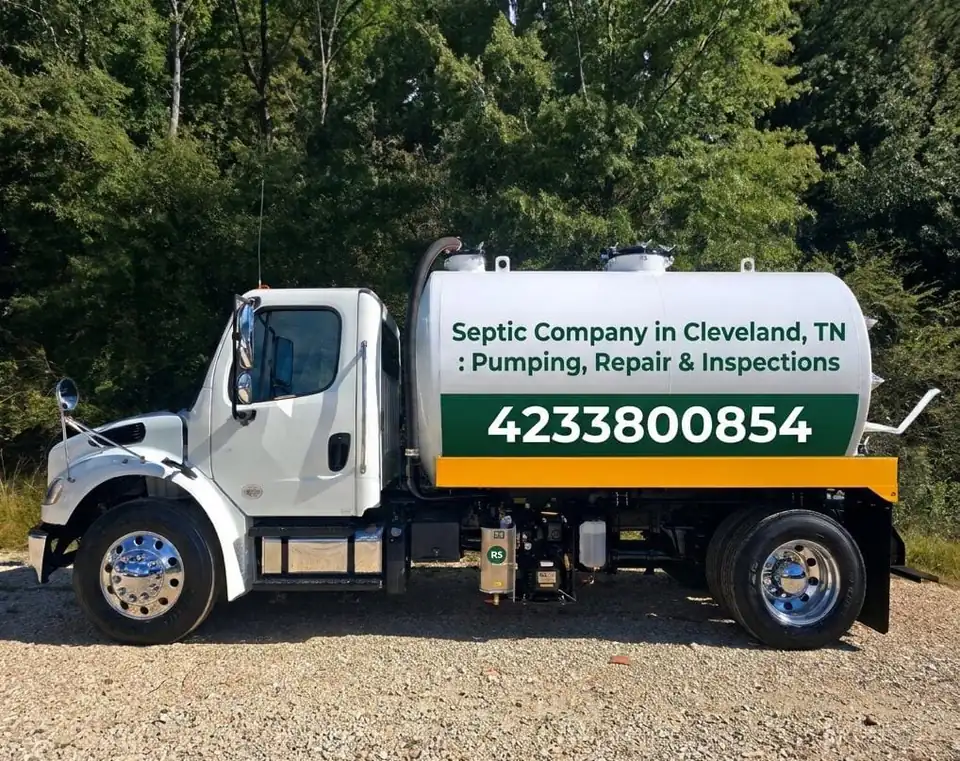
We answer these calls across Cleveland (37311, 37312, 37323), Charleston and Calhoun, Georgetown, McDonald and Hopewell, Ooltewah, Harrison, and Benton and Ocoee, across Bradley, Hamilton, Polk and McMinn counties. See all service areas.
From our crew
What do new septic owners ask us most?
We meet a lot of families who just moved out from town into the county.
- “Where’s the tank?” Usually in line with the main drain, 10 to 25 feet from the house.
- “Do I need additives?” No. Pump on schedule instead.
- “Can we have a garbage disposal?” Yes, but plan to pump more often.
- “What’s this box with a light?” A pump alarm. Learn what it means before you need to.
FAQ
Questions we hear about this
How do I take care of a septic system?
Pump every 3 to 5 years, flush only waste and toilet paper, keep grease out and protect the drain field.
Can I use bleach with a septic system?
Normal household amounts are fine. Avoid pouring large amounts down drains.
How do I know when my septic tank is full?
Slow drains, gurgling and smells are common signs. See signs your tank is full.
Can I plant a garden over my drain field?
Grass is best. Don’t plant vegetables or trees over the field.
Do I need to be home when the tank is pumped?
Not always, as long as the crew can reach the lid and you’ve told them where it is.
Related: Free septic checklists · How often to pump in TN · Find your septic tank · Septic or sewer? · Flushable wipes
Last updated October 2, 2026.
Just moved onto septic?
Call and we’ll find your tank, pump it and walk you through it.