Home Septic Guide How often to pump
Septic maintenance guide
How often to pump a septic tank in Tennessee
The short answer is every 3 to 5 years for most homes. The right number for you depends on tank size, how many people live there and how you use water. Here is how to work it out.
Chart by tank size
Tennessee rules explained
Local soil tips
Quick answer
How often should you pump a septic tank?
Every 3 to 5 years for a typical family home, which is the EPA’s general guideline. Pump sooner if you have a big household, a garbage disposal, a small tank, or a pump system.
3–5 years
Typical interval for a family home
1,000 gal
Common tank size in Bradley County
⅓ full
Pump when sludge and scum reach about a third of the tank
Pumping chart
How often should your tank be pumped, by size and household?
| Tank size | 1–2 people | 3–4 people | 5–6 people |
|---|---|---|---|
| 750 gallons | About 4–5 years | About 2–3 years | About 1–2 years |
| 1,000 gallons | About 5–6 years | About 3–4 years | About 2 years |
| 1,250 gallons | About 6–7 years | About 4–5 years | About 2–3 years |
| 1,500 gallons | About 7–8 years | About 5 years | About 3 years |
A rough guide only. Garbage disposals, frequent laundry, water softeners and home businesses all shorten the interval. The most reliable answer comes from measuring the sludge at a pump-out.
What changes the number
What means you should pump sooner?
Garbage disposal
Food scraps add solids fast and can cut the time between pump-outs by a year or more.
Big household or guests
More people means more waste. Long visits over holidays count too.
Heavy laundry days
Several loads in one day push solids out to the drain field before they settle.
Pump or alternative system
These systems have parts that need regular checks, often yearly.
Older tank
Old concrete tanks may be smaller than today’s tanks and have worn baffles.
Clay soil drain field
On Bradley County red clay, a field has little room for error, so keeping solids out matters more.
Tennessee rules
What does Tennessee require, and who should you ask?
Septic systems in Tennessee are permitted by the Tennessee Department of Environment and Conservation (TDEC), Division of Water Resources. In Bradley, Polk and McMinn counties, that means the local TDEC field office. In Hamilton County, including Ooltewah and Harrison, the Hamilton County Groundwater office handles septic permits.
For most existing homes there is no routine pumping deadline you have to meet. The schedule is up to you, which is exactly why many tanks go 10 or 15 years without service until something backs up. When you buy or sell a home, many lenders and buyers ask for a septic inspection, which usually includes pumping.
Local timing tip
When is the best time of year to pump around Cleveland?
Late summer and early fall are usually the driest months here, which makes lids easier to dig up and the yard easier on the truck. Pumping before the wet months also gives your drain field the best chance through the heavy winter and spring rain, when backups are most common.
Signs you are overdue
Which signs mean you shouldn’t wait for the schedule?
- Slow drains in more than one fixture
- Gurgling toilets or drains
- Sewage smell near the tank or in the yard
- Unusually green or soggy grass over the drain field
- Water backing up into a tub or floor drain
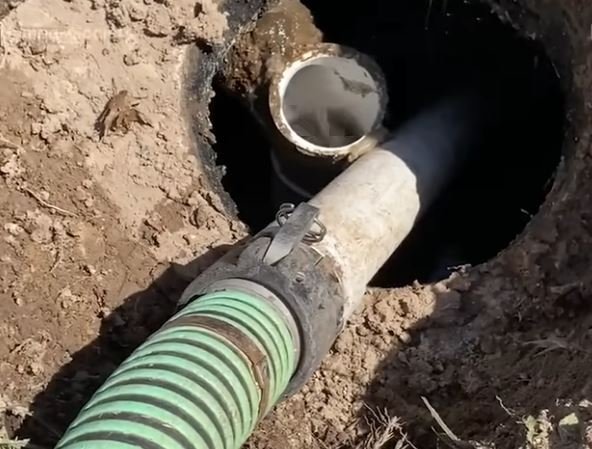
We answer pumping calls across Cleveland (37311, 37312, 37323) and South Cleveland, Charleston and Calhoun, Georgetown, McDonald and Hopewell, Ooltewah, Harrison, and Benton and Ocoee, across Bradley, Hamilton, Polk and McMinn counties. See all service areas.
From our crew
How do we decide your pumping interval?
The chart is a starting point. On a pump-out, this is what tells us your real number.
- How deep the sludge is. If it’s under a third of the tank after 4 years, you can likely stretch it.
- How thick the scum is. A heavy top layer usually means a garbage disposal or a lot of cooking grease.
- How the house is used. Two retirees and a family of six with teenagers are very different.
- The soil under the field. On slow Bradley County clay, we’d rather see you pump a little early than late.
Local case example
Example: stretching the schedule in South Cleveland
The problem
A retired couple had pumped every 2 years out of habit.
What we found
At the pump-out, the sludge was well under a third of the 1,000-gallon tank.
What we did
Pumped the tank, checked the baffles and measured the layers.
The result
We moved them to a 5-year schedule, which saves them a pump-out every few years.
Example scenario based on common jobs in our area. It is not a customer review.
FAQ
Pumping schedule questions
How often should you pump a septic tank in Tennessee?
Most Tennessee homes should pump every 3 to 5 years. A small household with a large tank can go longer; a big family, a garbage disposal or a smaller tank means pumping more often.
Does Tennessee require septic pumping on a schedule?
For most single-family homes, Tennessee does not set a routine pumping deadline. Pumping is often needed or checked when a home is sold, when a system is repaired, or when a permit is issued for new work. Check with TDEC, or Hamilton County Groundwater in Hamilton County, for your situation.
How do I know when my tank was last pumped?
Look for an old invoice, ask the previous owner, or call the local pumping companies. If there is no record, pump now and start a record from today.
Can you pump a septic tank too often?
Pumping more often than needed does not harm the tank, but it costs money. Once we measure the sludge at a pump-out, we can tell you a sensible interval for your home.
Do additives mean I can pump less often?
No. The EPA does not recommend relying on additives, and they do not remove the need to pump. Solids still build up and must be pumped out.
Related: Free septic checklists · Septic calendar · Septic tank pumping · Pumping cost · Maintenance plans · Signs your tank is full
Last updated September 2026.
Not sure when your tank was last pumped?
Call and we will measure the sludge and set your schedule.