Home Septic Guide Backup after heavy rain
Septic problem guide
Septic backing up after heavy rain?
It’s the most common septic call we get in late winter and spring around Cleveland. After days of rain, the red clay over your drain field fills with water and can’t take any more from the tank. Here’s why it happens, what to do tonight, and how to tell if it’s more than the weather.
What to do right now
Why rain causes backups
When it’s the field, not the weather
Quick answer
Why does my septic back up when it rains?
Heavy rain saturates the soil around the drain field, so water from the tank has nowhere to go. It backs up to the tank, then to the lowest drain in the house. A tank that’s close to full, downspouts aimed at the field, or old lids that let rainwater in make it worse.
~50 in.
Yearly rain in the Cleveland area
Clay
Slow-draining soil across Bradley County
Days
How long a soaked field needs to recover
Right now
What should you do if your septic backs up after rain?
- Cut water use to the minimum. No laundry, dishwasher or long showers until the ground dries.
- Keep people and pets away from any sewage. Clean up with gloves and disinfectant.
- Check where your gutters drain. Move downspouts so roof water runs away from the drain field.
- Don’t open the tank. Septic gases are dangerous and a full tank can overflow.
- Call if sewage is coming into the house. Pumping the tank buys time while the field dries out.
Why it happens
Why does rain affect septic systems so much around Cleveland?
A drain field works by letting treated water soak into the soil. Much of Bradley County sits on red clay, which takes in water slowly even in dry weather. Southeast Tennessee gets around 50 inches of rain in a typical year, much of it from December through April.
When the ground is full of rainwater, the field can’t take water from the tank. The tank fills, and the next thing to back up is your house. Homes on low ground near the Hiwassee River, Chickamauga Lake or a creek see it first.
Soaked soil
Rain fills the spaces in the soil the field relies on.
Roof and yard runoff
Gutters and slopes can send extra water straight over the field.
A tank near full
Less room in the tank means less time before it backs up.
Water leaking in
Old lids and cracked risers let groundwater into the tank.
Weather or failure?
Is it just the rain, or is the drain field failing?
| What you see | Likely cause | What to do |
|---|---|---|
| Backs up only in wet weeks, fine when dry | Saturated soil and a tank near full | Pump the tank; move downspouts |
| Soggy spot over the field even in dry weather | Field struggling or failing | Book a drain field check |
| Backs up right after pumping, even when dry | Blocked line or broken baffle | Camera and clear the line |
| Sewage smell and green stripes over the field | Effluent near the surface | Field check; limit water use |
Prevent it
How do you keep rain from backing up your septic?
- Pump every 3 to 5 years, ideally in the drier fall months before the wet season
- Point gutters and downspouts away from the tank and field
- Keep a riser with a tight lid so rainwater can’t get in
- Spread laundry across the week, especially in wet spells
- Don’t drive or park on the field when the ground is soft
Local case example
Example: a soaked field in Charleston
The problem
After a week of storms, a home near the Hiwassee River had gurgling toilets and a wet, smelly patch over the field.
What we found
The tank was full and the field was saturated. Two downspouts emptied straight onto the field lines.
What we did
Pumped the tank to stop the backup and rerouted both downspouts. Asked the owners to go easy on water for two weeks.
The result
The field dried out and the drains returned to normal. A dry-weather check found the field working.
Example scenario based on common jobs in our area. It is not a customer review.
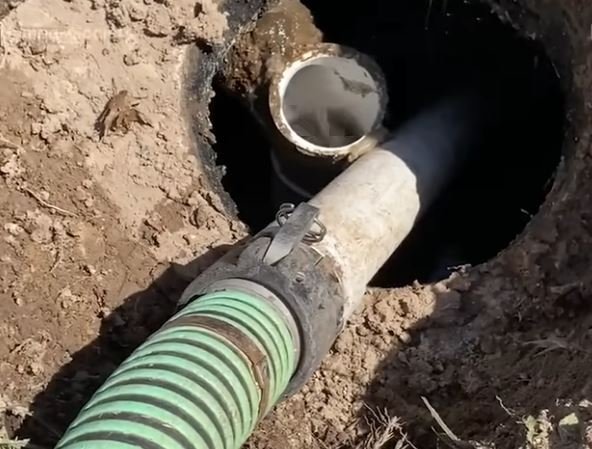
We answer these calls across Cleveland (37311, 37312, 37323), Charleston and Calhoun, Georgetown, McDonald and Hopewell, Ooltewah, Harrison, and Benton and Ocoee, across Bradley, Hamilton, Polk and McMinn counties. See all service areas.
From our crew
What do we see on rainy-season calls around Cleveland?
Our phones get busy after the first big wet stretch of the year. Most of those calls look alike.
- Downspouts dumping on the field. One roof can put thousands of gallons on a field in a Tennessee thunderstorm.
- Tanks that haven’t been pumped in years. Rain is what finally tips them over.
- Low lots near water. Near the Hiwassee, Chickamauga Lake and Wolftever Creek, fields stay wet longer.
- Holiday guests plus rain. December and January backups are often both at once.
FAQ
Questions we hear about this
How long does it take for a drain field to dry out after rain?
Usually a few days to two weeks of dry weather, depending on soil and how full the tank is. Clay soil takes longer.
Should I pump my septic tank after heavy rain?
If it’s backing up, pumping stops the backup and buys time. If the field stays wet in dry weather, the field needs to be checked too.
Can rain water get into my septic tank?
Yes, through cracked lids, loose risers or gaps around pipes. That fills the tank faster and can set off a pump alarm.
Is it safe to use the toilet when the septic is backing up?
Use as little water as possible. If sewage is coming into the house, stop using water and call for help.
Does homeowners insurance cover septic backups from rain?
It depends on the policy. Many policies treat backups separately. Check with your agent.
Related: Signs your tank is full · Drain field repair · Emergency septic service · How often to pump in TN · Septic pumping in Cleveland
Last updated September 30, 2026.
Backing up after the rain?
Call and we’ll pump the tank and check what the field is doing.