Home Septic Guide Landlords and rentals
Landlord guide
Septic systems for landlords and rental properties
Tenants don’t always know they’re on septic, and they don’t always know what not to flush. For landlords around Cleveland, a pumping schedule and a one-page tenant sheet prevent most emergency calls.
Pumping schedule
Tenant rules
Records
Quick answer
How often should a rental property septic tank be pumped?
Rentals often need pumping more often than owner-occupied homes, commonly every 2 to 3 years, because tenants change and habits vary. Pump between tenants when you can, keep records, and give every tenant a simple do-not-flush list.
2–3 yrs
Common rental interval
Between tenants
Good time to pump
1 page
Tenant do-and-don’t sheet
Plan
What septic plan works for rental properties?
- Find and mark the tank at every property.
- Pump on a schedule, ideally between tenants.
- Check baffles and filters at each pump-out.
- Give tenants a one-page sheet: what not to flush, what the alarm means, who to call.
- Keep records by property.
- Put trash cans in every bathroom.
Tenant sheet
What should your tenant septic sheet say?
- This home is on a septic system, not city sewer
- Only toilet paper goes in the toilet. No wipes, even “flushable”
- No grease down the sink
- Spread laundry through the week
- If the alarm light or buzzer comes on, cut water use and call
- Call right away if drains are slow or you smell sewage
Who pays
Who pays for septic problems in a rental?
Usually the owner pays for routine pumping and repairs. If a backup is caused by tenant misuse, like wipes or grease, many leases let the owner recover the cost. Check your lease and local rules, and keep pump-out records so the cause is clear.
Local
Which rentals around Cleveland need the most attention?
- Homes near Lee University and Cleveland State with frequent turnover
- Short-term rentals on Chickamauga Lake and near the Ocoee River
- Mobile homes on shared tanks
- Older county homes with small 1,000-gallon tanks
Local case example
Example: a rental near Lee University
The problem
A landlord with a rental near campus had two backups in one year with different tenants.
What we found
The tank was overdue and the tenants were flushing wipes.
What we did
Set up a plan: pump every 3 years, a yearly check and a simple do-and-don’t list for tenants.
The result
No backups since, and the landlord has a service record for every visit.
Example scenario based on common jobs in our area. It is not a customer review.
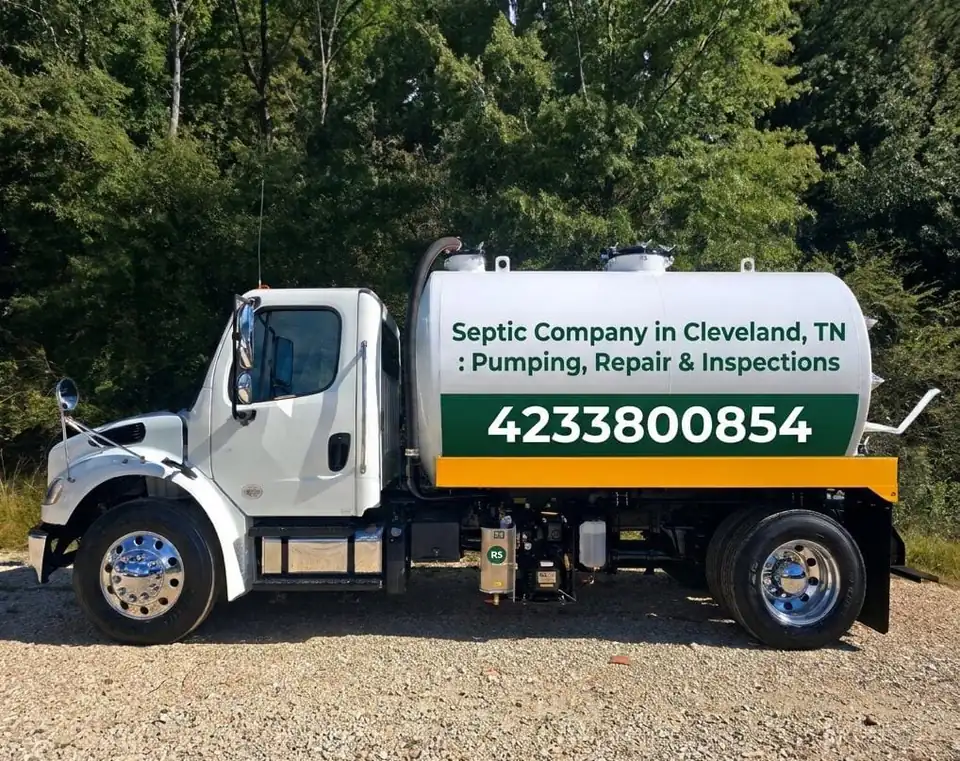
We answer these calls across Cleveland (37311, 37312, 37323), Charleston and Calhoun, Georgetown, McDonald and Hopewell, Ooltewah, Harrison, and Benton and Ocoee, across Bradley, Hamilton, Polk and McMinn counties. See all service areas.
From our crew
What do we see at rentals?
Rental septic calls follow a pattern around Cleveland.
- Backups right after move-in. New tenants, new habits.
- Wipes. The number one cause.
- Unplugged alarms. Tenants silence and forget them.
- No records. Owners who inherited or bought rentals don’t know the history.
FAQ
Questions we hear about this
Do I have to tell tenants the home is on septic?
It’s wise to. A short sheet prevents the most common problems.
Can I charge a tenant for a septic backup?
It depends on your lease and the cause. Keep records.
Should rentals be on a maintenance plan?
It helps. See maintenance plans.
How often should I pump a short-term rental?
Often more than a family home. Pump before the busy season.
What if a tenant flushes wipes?
Clear the line or inlet, then remind tenants. Trash cans in each bathroom help.
Related: Free septic checklists · Maintenance plans · Flushable wipes · Mobile home septic · Septic alarm going off · Septic tank pumping service
Last updated October 3, 2026.
Managing rentals on septic?
Call to set up a schedule and records for each property.