Home Septic to sewer conversion
Septic to sewer
Septic to sewer conversion in Cleveland, TN
When sewer reaches your street, the old septic tank doesn’t just stop mattering. It has to be pumped and closed properly so it doesn’t collapse or hold sewage in your yard. Here’s how the switch works and what we do.
Tank pumped and closed properly
Works with your plumber
Clear steps
Quick answer
What happens to a septic tank when you connect to sewer?
The tank is pumped empty, then closed so it can’t collapse or hold water, usually by breaking the bottom or crushing it and filling it with soil or gravel. The house line is reconnected to the sewer. Ask your sewer utility about connection permits and any local rules.
Pumped
Emptied before closing
Filled
So it can’t cave in
Utility
Sets connection rules and fees
The steps
How does a septic to sewer conversion work?
- Talk to the utility. Cleveland Utilities, or your local sewer provider, explains tap fees, permits and connection rules.
- Plan the new line. A plumber runs the line from the house to the sewer tap.
- Pump the septic tank. Every compartment is emptied.
- Close the tank. Break the bottom or crush it, then fill it so it can’t collapse.
- Restore the yard. Grade and seed over the old tank.
Why it matters
Why can’t you just leave the old septic tank?
Collapse risk
An empty or rotting tank can cave in under a person, mower or car.
Standing water
An open tank fills with rainwater and can breed mosquitoes and smell.
Leftover sewage
A tank left full holds raw sewage in your yard.
Cost
What drives the cost of a septic to sewer switch?
| Part of the job | Who usually does it | What moves the price |
|---|---|---|
| Utility tap and fees | Sewer utility | Set by the utility |
| New line from house to sewer | Plumber or contractor | Distance, depth, driveways in the way |
| Pumping the septic tank | Septic company | Tank size and access |
| Closing the tank | Septic company or contractor | Tank size, fill material |
| Yard repair | Contractor or owner | Size of the dig area |
We handle pumping and closing the tank and coordinate with your plumber. Tap fees and line work are priced by others.
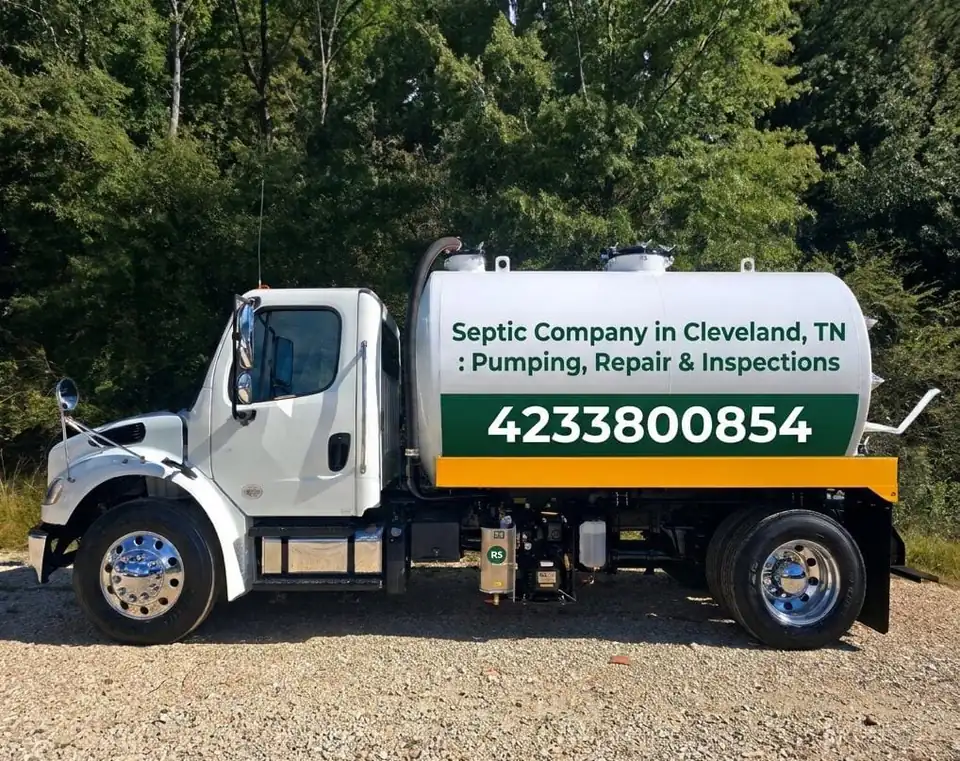
We answer these calls across Cleveland (37311, 37312, 37323), Charleston and Calhoun, Georgetown, McDonald and Hopewell, Ooltewah, Harrison, and Benton and Ocoee, across Bradley, Hamilton, Polk and McMinn counties. See all service areas.
From our crew
What do we see on conversion jobs?
Sewer extensions around Cleveland reach older neighborhoods first, where tanks are often decades old.
- Tanks nobody pumped before closing. They must be emptied first.
- Old steel tanks. Some are rusted thin and dangerous to walk near.
- Two tanks on one lot. Common where a house was added onto over the years.
- Lids lost under landscaping. We find and uncover them before pumping.
FAQ
Questions we hear about this
Do I have to connect to sewer if it’s available?
Local rules may require it when sewer is close enough. Ask Cleveland Utilities or your sewer provider.
What do you do with an old septic tank?
Pump it empty, then break or crush it and fill it so it can’t collapse or hold water.
Can I use my old septic tank for rainwater?
That isn’t a safe or common use. Ask your utility and local officials before reusing any tank.
How long does a septic to sewer conversion take?
The septic part usually takes a day. Scheduling the utility tap and plumbing can take longer.
Who pays for the sewer tap?
Usually the property owner. The utility sets the fee.
Related: Septic or sewer? · Septic tank pumping · Find your septic tank · Contact us
Last updated October 1, 2026.
Switching to sewer?
Call and we’ll pump and close the old tank the right way.