Home Septic Guide Find septic permit records
Tennessee rules
How to find your septic permit records in Tennessee
A septic permit record can show where your tank and field are, how big they are and when they went in. Here’s where to look around Cleveland, and what to do when there’s nothing on file.
Who to ask
What the record shows
No records? Next steps
Quick answer
Where can I find my septic permit in Tennessee?
Ask the agency that permits septic systems in your county. For Bradley, Polk and McMinn counties that’s TDEC’s Division of Water Resources; for Ooltewah and Harrison, the Hamilton County Groundwater office. Have your address and parcel number ready. Older homes may have no record on file.
TDEC
Bradley, Polk & McMinn
Groundwater
Hamilton County
Parcel #
Speeds up the search
Where to look
How do you search septic permit records by address in Tennessee?
It depends on the county. Most Tennessee counties, including Bradley, Polk and McMinn, have their septic systems permitted by TDEC. Nine counties run their own programs instead, including Hamilton County, so records for Ooltewah and Harrison homes are kept by the county.
Bradley, Polk or McMinn County (TDEC)
- Start on TDEC’s septic page. Use the “Search for Septic Tank Permits” link on TDEC’s septic systems FAQ.
- Search with the county and street address. If nothing comes up, try other details you have: the owner’s name when the house was built, the subdivision and lot, or the parcel number from the county property assessor.
- Still nothing? Call TDEC’s Chattanooga Environmental Field Office at (423) 634-5745 (1301 Riverfront Parkway, Suite 206, Chattanooga). It covers Bradley, Polk, McMinn and Meigs counties.
Ooltewah, Harrison and the rest of Hamilton County
- Go to Hamilton County’s septic page, then Online Services → Building Inspection App → Document Retrieval.
- Enter the street name only, without the house number. The county asks for it this way.
- Address not listed? Contact Hamilton County Groundwater at (423) 209-7876 (Development Services, 1250 Market Street, Suite 3046, Chattanooga).
Other Tennessee counties
Blount, Davidson, Hamilton, Jefferson, Knox, Madison, Sevier, Shelby and Williamson counties run their own septic programs, so ask the county. Everywhere else, start with the TDEC Environmental Field Office for that county.
Online tools and phone numbers change. If one doesn’t work, check the agency’s website. Older permits are often not scanned, so an empty online search doesn’t mean there’s no record.
Where to look
Where do septic records usually turn up?
The permitting agency
TDEC, or Hamilton County Groundwater in Hamilton County, keeps permit files.
Your closing papers
Inspection reports and disclosures often include septic details.
The previous owner or builder
They may have the permit, drawing or pump receipts.
Past pumping companies
An old invoice can show the tank size and lid location.
What it shows
What does a septic permit record tell you?
- Tank size in gallons
- Drain field size and number of trenches
- A rough drawing of where the tank and field are
- The number of bedrooms the system was designed for
- When it was installed and inspected
Drawings on older permits are often rough. Treat them as a starting point, then confirm on site.
No records
What if there are no septic records for your home?
Many homes built before the 1980s, and farmhouses in the north county, have no usable record. That’s normal. A septic company can find the tank from the cleanout, probe for the lids and trace the field lines, then draw a simple map you keep with the house papers.
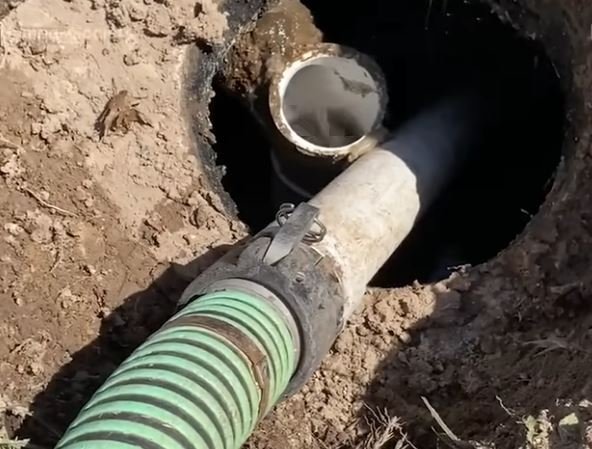
We answer these calls across Cleveland (37311, 37312, 37323), Charleston and Calhoun, Georgetown, McDonald and Hopewell, Ooltewah, Harrison, and Benton and Ocoee, across Bradley, Hamilton, Polk and McMinn counties. See all service areas.
From our crew
What do we tell people who can’t find records?
We locate tanks with no paperwork every week around Bradley County.
- Start with the cleanout. Most tanks are 10 to 25 feet out, in line with the main drain.
- Check the oldest part of the house. On farmhouses, the tank lines up with the original bathroom.
- Keep what we draw. A simple map saves the next owner the same search.
- Add a riser. Then no one ever has to hunt for it again.
FAQ
Questions we hear about this
Are septic permits public record in Tennessee?
Permit files are generally available from the permitting agency. Ask TDEC, or Hamilton County Groundwater in Hamilton County, how to request them.
How do I find my septic tank without records?
Follow the main drain from the house, look for the cleanout and probe the yard, or call a septic company to locate it.
Does the county have a map of my septic system?
Sometimes. Older permits may include a rough drawing. Many older homes have none.
Who has septic records in Ooltewah?
The Hamilton County Groundwater office.
Should I keep my septic records?
Yes. Keep the permit, pump receipts and a map with your house papers.
Can I look up a septic permit online in Tennessee?
Often, yes. TDEC has an online septic permit search for the counties it covers, and Hamilton County has a document retrieval tool. Older permits may not be scanned, so call the office if you find nothing.
Related: Find your septic tank · TDEC septic permits · Buying a home with septic · Riser installation · Septic tank pumping near Cleveland
Last updated October 22, 2026.
No records and can’t find your tank?
Call and we’ll locate it and draw you a map.
Recap: How to Find Septic Permit Records in Tennessee
To find septic permit records in Tennessee, start with the office that permits septic systems in that county: TDEC’s Chattanooga Environmental Field Office for Bradley, Polk and McMinn, or Hamilton County Groundwater for Ooltewah and Harrison. Both keep permit files that show the system’s layout, size and install date, even when the paperwork at the house itself is missing.
For general background on how septic systems are permitted and inspected, see the EPA’s septic system guide.