Home Septic Installation
New septic systems · Cleveland, TN
Septic System Installation in Cleveland, TN
Building in Bradley County or replacing a system that is done for good? Here is how a new septic system gets permitted and installed in Tennessee, what it costs, and what the ground on your lot has to do with it.
Soil evaluation to final inspection
TDEC permits handled
Conventional and alternative systems
Quick answer
How much does a new septic system cost in Cleveland, TN?
A conventional septic system commonly costs from several thousand dollars to over $10,000 around Cleveland. Lots with shallow rock, steep slopes or slow clay often need an alternative system, which costs more. The soil evaluation on your lot is what really sets the price.
Several thousand+
Conventional system
More
Alternative system
By bedrooms
How Tennessee sizes systems
Start to finish
How a new septic system is installed in Tennessee
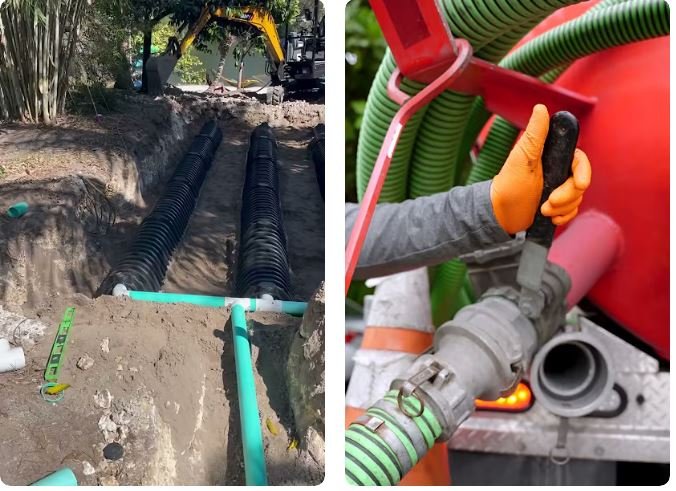
- Soil evaluation. The soil on your lot is checked to see how well it absorbs water and where a drain field can go.
- Permit application. A construction permit is applied for through TDEC, based on the soil results and the number of bedrooms.
- System design. Conventional if the soil allows it; an alternative design if it does not.
- Installation. Tank set, lines laid, distribution box leveled, and risers added so the lids are easy to reach later.
- Inspection before cover. The system is inspected before it gets buried.
- Cover, clean up and walk-through. You get a map of where everything is, and how to take care of it.
Local ground
Why your lot matters so much around Cleveland
Clay soil
Much of Bradley County is clay that drains slowly. That can mean a larger drain field or an alternative design.
Rock and slopes
Rocky, hilly ground out toward the Polk County line and the ridges makes digging harder and can limit where the field goes.
Rain and water tables
Around 50 inches of rain a year, and wet ground near creeks, the Hiwassee River and Chickamauga Lake, all affect the design.
Mobile homes and new builds
Many county lots are for new homes or manufactured homes. Plan the system and the home placement together so trucks never cross the field.
System types
Conventional vs. alternative septic systems
| Conventional | Alternative | |
|---|---|---|
| Best for | Deep, well-draining soil | Clay, shallow rock, slopes, wet ground |
| How it works | Gravity flow from tank to field lines | Often uses a pump to spread water evenly |
| Cost | Lower | Higher |
| Maintenance | Pumping every 3–5 years | Pumping plus pump and alarm checks |
Replacing an old system
When is it time to replace a septic system instead of repairing it?
- The drain field has failed across most of its area
- An old steel tank has rusted through
- The tank is cracked badly or collapsing
- You are adding bedrooms and the system is too small
- The system was never permitted and is failing
If only one part has failed, repair usually makes more sense. See septic repair and drain field repair first.
Before you build
Planning a new home on septic? Do this first
- Get the soil evaluated before you finalize where the house goes
- Keep the drain field area away from the driveway, pool and future garage
- Plan for risers so the lids are always easy to reach
- Keep trees away from where the lines will run
- Ask whether your road has, or will soon have, sewer service
Service area
Where we work around Cleveland
Cleveland and the rest of Bradley County, plus nearby Ooltewah, Harrison, Benton and Ocoee.
Cleveland
South Cleveland
Charleston
Calhoun
McDonald
Georgetown
Hopewell
Ooltewah
Benton
Ocoee
Harrison
Zip codes: 37311, 37312, 37320, 37323, 37364. All service areas →
FAQ
Septic installation questions
How much does it cost to put in a septic tank in Tennessee?
A conventional system commonly runs from several thousand dollars to over $10,000. Alternative systems, needed when the soil will not absorb water well enough, cost more. The soil on your lot, the number of bedrooms and how hard the ground is to dig decide the final price.
Do I need a permit for a new septic system in Tennessee?
Yes. Every new septic system in Tennessee needs a construction permit through the Tennessee Department of Environment and Conservation (TDEC), and the system is inspected before it is covered.
Can I install my own septic system in Tennessee?
A permit is required no matter who does the work, and septic installers in Tennessee are permitted through TDEC. If you are thinking about doing any of it yourself, check with TDEC first.
How long does it take to install a septic system?
The digging and installing often takes a few days. The permit and soil evaluation can take longer, and wet weather in clay soil can push the schedule.
How is septic tank size decided?
Tennessee sizes systems by the number of bedrooms, not the number of people. More bedrooms means a bigger tank and a larger drain field.
What is an alternative septic system?
A system designed for lots where a conventional drain field will not work, such as shallow soil, rock, steep slopes or slow-draining clay. They often use pumps or special distribution to spread the water out.
What happens if my lot does not pass the soil evaluation?
It may still be buildable with an alternative system or a different drain field location. The soil evaluation tells you what your lot can support.
Can a septic system be installed in winter?
Sometimes, but wet clay is hard to work and can delay installation. Late spring through fall is usually the easier window around Cleveland.
Related: Septic tank pumping · Drain field repair · Septic inspections · Septic costs
Last updated September 2026.
Planning a new septic system?
Call to talk through your lot, the permit and a realistic price range.