Home Septic Inspections
Septic inspections · Cleveland, TN
Septic Inspection in Cleveland, TN
Buying or selling a home with septic in Bradley County? Get an inspection that actually opens the tank, checks the parts that fail, and gives you a clear report you can hand to the other side.
Tank pumped and inspected
Photos of what we find
Report for buyers, sellers and realtors
Quick answer
What does a septic inspection include?
A proper septic inspection locates and opens the tank, checks the liquid level, pumps the tank so the inside can be seen, inspects the inlet and outlet baffles, tank walls and lid, checks the effluent filter and distribution box, walks the drain field for signs of failure, and ends with a written report.
Two kinds of inspection
Visual check vs. full septic inspection
| Visual check | Full inspection | |
|---|---|---|
| Tank located and opened | Sometimes | Yes |
| Tank pumped so the inside can be seen | No | Yes |
| Baffles, walls and lid inspected | Limited | Yes |
| Distribution box checked | No | Yes |
| Drain field walked and probed | Quick look | Yes |
| Written report with photos | Short note | Yes |
| Good enough for a home sale | Rarely | Yes |
For a home sale, always ask for a full inspection with the tank pumped. A quick look at a full tank tells you very little.
Step by step
How our septic inspection works
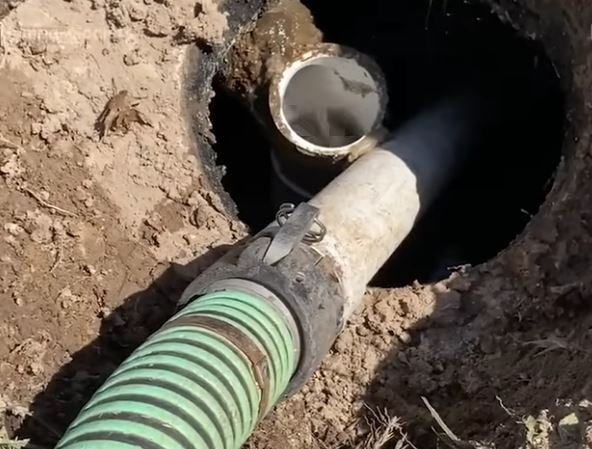
- Pull the records. We look for the TDEC septic permit so we know the tank size and layout before we arrive.
- Locate and open the tank. If the lid is buried, we find it and dig it up.
- Check the level before pumping. A high level can point to a drain field problem.
- Pump and inspect. Baffles, tank walls, lid and effluent filter, with photos.
- Check the distribution box and field. We look for flooded lines, soggy ground and signs of failure.
- Write it up. A clear report of what is normal, what needs attention now, and what can wait.
Who it is for
Septic inspections for every side of the deal
Home buyers
Know what you are buying before you close. A failing drain field can cost $8,000 to $20,000 or more to replace.
Home sellers
Inspect before you list, fix small problems on your schedule, and hand buyers a clean report.
Realtors
Fast scheduling around closing dates, and a report written so both sides can understand it.
Red flags
What septic problems show up most in Cleveland-area inspections?
- Missing or broken baffles, especially in older concrete tanks
- Nobody knows when it was last pumped, common on older homes and mobile homes around the county
- A high liquid level that points to a drain field struggling in clay soil
- Cracked or unsafe lids
- Soggy ground over the field lines, especially on low lots near creeks, the Hiwassee River or Chickamauga Lake
- Driveways, sheds or additions built over part of the system
Before you buy
Buying a house with septic in Bradley County? Ask these questions
- When was the tank last pumped, and by whom?
- Is there a TDEC permit on file, and does it match the number of bedrooms?
- Has the drain field ever been repaired or replaced?
- Is the house on septic, or on Cleveland Utilities sewer? (Check for a sewer charge on the utility bill.)
- Are there any alarms, pumps or a second tank?
- Has anything been built or paved over the system?
Service area
Where we work around Cleveland
Cleveland and the rest of Bradley County, plus nearby Ooltewah, Harrison, Benton and Ocoee.
Cleveland
South Cleveland
Charleston
Calhoun
McDonald
Georgetown
Hopewell
Ooltewah
Benton
Ocoee
Harrison
Zip codes: 37311, 37312, 37320, 37323, 37364. All service areas →
FAQ
Septic inspection questions
Does Tennessee require a septic inspection to sell a house?
In most cases, Tennessee does not require one by law. But buyers, lenders and realtors often ask for one, and it is the only way to know what you are buying. A problem found after closing becomes the buyer’s bill.
Should the tank be pumped during an inspection?
Yes, for a full inspection. You cannot see the baffles, the tank walls or the outlet with the tank full. Pumping during the inspection also gives the new owner a fresh start.
How long does a septic inspection take?
Usually a couple of hours on site for a full inspection, longer if the lid is buried or the tank has to be located first.
Who pays for the septic inspection, buyer or seller?
It is negotiable. Buyers usually order it as part of their due diligence. Some sellers get one first so there are no surprises during the deal.
What happens if the inspection finds a problem?
You get a clear report of what was found. Small issues like a broken baffle or cracked lid are often fixed before closing. Bigger ones, like a failing drain field, usually lead to a repair credit or a price adjustment.
Can a regular home inspector inspect my septic system?
Most general home inspectors do not open the tank or evaluate the drain field. A septic inspection is a separate job done by a septic company.
How do I find the septic permit for a house I am buying?
TDEC keeps septic permit records you can search online, and they often show the tank location and size. The seller or listing agent may also have them.
What should I look for in an honest septic inspector?
Someone who pumps the tank so they can actually see inside, shows you photos, explains what is normal wear versus a real problem, and does not push a repair they would also be paid to do without explaining why.
Related: Septic tank pumping · Drain field repair · Finding your septic tank · Septic pumping cost
Last updated September 2026.
Closing coming up?
Call to schedule a full septic inspection around your closing date.